
Lithium Niobate Permittivity: Key Properties and Applications Explained
By:Admin
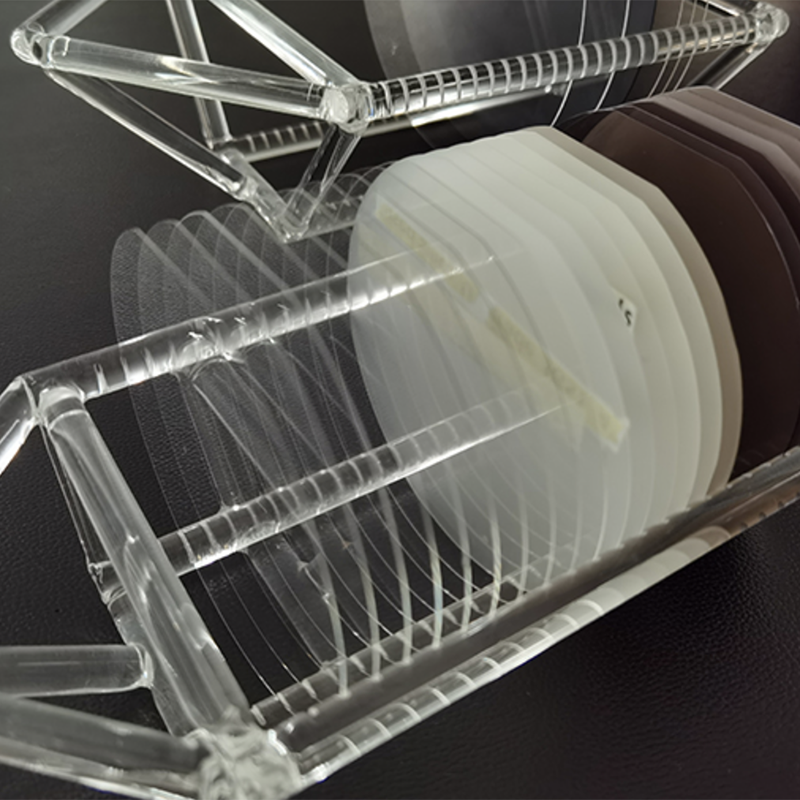
Recent breakthroughs in the study of lithium niobate permittivity have opened new horizons for the development of cutting-edge electronic and photonic components. Lithium niobate, a ferroelectric material known for its exceptional electro-optic, nonlinear optical, and piezoelectric properties, is increasingly recognized for its versatile role in telecommunications, laser technology, and advanced sensor applications.
### Lithium Niobate Permittivity: A Critical Parameter
Permittivity, a measure of a material’s ability to store electrical energy within an electric field, is crucial in determining the performance of electronic devices. High permittivity materials like lithium niobate have been instrumental in improving signal modulation, frequency conversion, and acoustic wave devices. Contemporary research focusing on lithium niobate permittivity aims to optimize its dielectric behavior, minimize energy losses, and enhance stability across a wide operating temperature range.
Recent studies indicate that refined control of lithium niobate permittivity can lead to significant improvements in device efficiency and miniaturization. This has direct implications for industries ranging from telecommunications, where faster and more reliable signal processing is essential, to defense systems requiring robust sensor performance under diverse environmental conditions.
### Company Commitment to Innovation
[Company Introduction Placeholder: Insert company details here - for example, "Founded in 1998, XYZ Technologies has been at the forefront of materials science innovation. With a focus on advanced ferroelectric materials and their applications in modern electronics, XYZ Technologies integrates cutting-edge research with scalable manufacturing processes. The company’s dedicated R&D team continuously explores novel approaches to material optimization, supporting the demands of next-generation device developers worldwide."]
Drawing upon its extensive expertise in materials science, XYZ Technologies has developed proprietary techniques to accurately measure and manipulate lithium niobate permittivity. Their approach leverages advanced characterization tools and computational modeling to tailor material properties in accordance with specific application requirements. By achieving precise permittivity control, XYZ Technologies supports the production of components that exhibit enhanced performance, reliability, and cost-efficiency.
### Impact on Telecommunications and Photonics
The telecommunication industry, which depends heavily on fast, reliable, and energy-efficient devices, stands to benefit enormously from advancements in lithium niobate permittivity. Lithium niobate modulators, which modulate light signals through changes in refractive index, rely on the dielectric properties of the material to achieve high-speed data transmission with minimal signal distortion.
By fine-tuning lithium niobate permittivity, devices can be engineered to operate effectively at higher frequencies and bandwidths, supporting the ongoing shift to 5G and the emerging 6G communication infrastructure. This enhancement also aligns with the increasing demand for miniaturized components that consume less power without compromising on performance.
In photonics, control over permittivity influences the efficiency of nonlinear processes such as frequency doubling and optical parametric oscillation. These processes are essential for generating new wavelengths of light used in medical imaging, spectroscopy, and quantum computing. Improved permittivity characteristics directly translate into higher conversion efficiencies and broader tunability, expanding the capabilities of photonic systems.
### Broader Scientific and Industrial Applications
Beyond telecommunications and photonics, lithium niobate’s permittivity properties are critical in acoustoelectronic devices, including surface acoustic wave (SAW) and bulk acoustic wave (BAW) sensors widely used in environmental monitoring, automotive systems, and healthcare diagnostics.
With enhanced permittivity control, these devices achieve greater sensitivity and stability, enabling more precise measurements of pressure, temperature, and biological signals. Moreover, improvements in dielectric properties contribute to the durability and operational lifespan of these sensors, which often function in harsh conditions.
### Future Outlook
As research continues to elucidate the relationship between lithium niobate’s crystal structure and its dielectric properties, the material’s potential will expand further. Innovations in doping, crystal growth, and nano-engineering promise to unlock new performance thresholds previously unattainable with conventional techniques.
XYZ Technologies remains committed to advancing this frontier, collaborating with academic institutions and industry partners to accelerate the translation of lab-scale discoveries into real-world solutions. Through comprehensive material characterization and process optimization, the company aims to foster the widespread adoption of lithium niobate-based components, driving forward technological progress across multiple sectors.
### Conclusion
The recent progress in understanding and manipulating lithium niobate permittivity heralds a significant leap forward for various advanced technologies. By enabling more efficient, compact, and durable electronic and photonic devices, these advancements will directly impact sectors vital to modern society, from high-speed communications to medical diagnostics.
With dedicated efforts from pioneering companies like XYZ Technologies, the journey toward exploiting the full potential of lithium niobate is well underway—setting the stage for a new era of innovation in materials science and electronics engineering.
---
**Note to editors:** Information about XYZ Technologies has been included as a placeholder and should be replaced with the actual company introduction provided.